FinishedSpring 2018
Liz and the Blue Bird
8.30Movie1h 30m
About
Synopsis
Liz and the Blue Bird is a 2018 anime film from Kyoto Animation. It was directed by Naoko Yamada, who is known for quiet, emotional films, and written by Reiko Yoshida. It opened in Japanese cinemas on April 21, 2018. The film is a spin-off of Sound! Euphonium, a popular series about a high school concert band, which is based on novels by Ayano Takeda. You can enjoy this film on its own, but fans of Sound! Euphonium will know the setting: Kitauji High School and its hard-working band club.
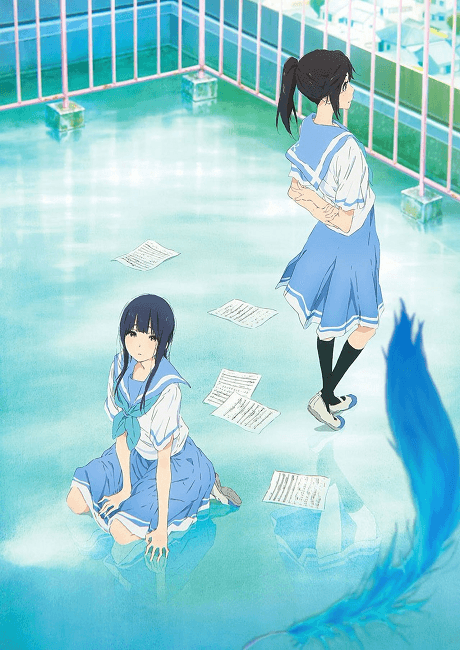
The film has a very different look from the TV series. The characters are drawn in a softer, lighter style, with thin lines and gentle colors. Yamada wanted to show the small, careful feelings of teenage friendship. There is little loud drama. Instead, the film pays close attention to small things: footsteps in a hallway, a glance, the way someone plays with her hair.
The main characters are two third-year students who are close friends. Mizore Yoroizuka plays the oboe. She is quiet, shy and rarely shows her feelings. She joined the band only because Nozomi asked her to, years ago. Nozomi Kasaki plays the flute. She is bright, friendly and popular, and she is always surrounded by people. For Mizore, Nozomi is the center of her world. For Nozomi, it is not so simple.
The band chooses a piece of music called "Liz and the Blue Bird" for its next big competition. The piece is based on a fairy tale. In the story, a girl named Liz lives alone. One day a blue bird comes to her in the form of a young girl, and the two live happily together. But Liz starts to wonder if keeping the bird close is truly best for her. The film shows parts of this fairy tale in a separate, painted storybook style, like pictures in a children's book.
In the music, the oboe and the flute play a long duet, a part for two instruments. Mizore and Nozomi must play it together. They play well, but something is missing, and their teacher can tell. As graduation comes closer, and each of them must think about the future, the two girls slowly realize that their friendship is not what they thought. Mizore must decide who in the fairy tale she really is, and what the story is trying to tell her.
The soundtrack by Kensuke Ushio is very minimal. He even used real sounds from the school and the instruments to build the background music, so image and sound work closely together. The music of the fictional piece is lovely, and it becomes the emotional center of the film.
Critics praised the film for its delicate storytelling and careful sound design. It won the Ofuji Noburo Award, a respected Japanese prize for animation. It is a slow, gentle film about friendship, love and letting go, and it is a good choice for viewers who like quiet, thoughtful stories.
Community
Reviews
No reviews yet
Be the first to share your thoughts about Liz and the Blue Bird.